- Wichita Life
- Posts
- 🌾 ⏪Wichita Rewind: What was here before Wichita?
🌾 ⏪Wichita Rewind: What was here before Wichita?
Do you know the history of the Wichita area?

Landon Huslig
February 04, 2026

TOGETHER WITH

Good morning, Wichita!
Today’s deep dive isn’t for everyone. It is just something that has been on my mind and it is just something I had to get out there. If you don’t like it, well sorry I’m not sorry, stay tuned tomorrow for our weekend rundown. (plz don’t unsubscribe)
Let's get to it!
- Landon Huslig

Together with Meritrust Credit Union

Wichita, meet Ashley Manning.
Ashley is the AVP of the Financial Wellbeing Team at Meritrust, a team focused on helping members, employees, and the community build healthier financial lives through:
Classes
1-on-1 financial coaching
Practical, real-world education
This work matters because money touches every part of our lives.
Oh, and the best part? It is free!
If you need guidance, reassurance you’re on the right track, or just a place to ask questions, this is your sign to connect with Meritrust’s Financial Wellbeing Team.
Reach out to your local branch by phone or get started online.
⏪Wichita Rewind: What Was Here Before Wichita?

I’ve written one-off articles in the past about… well… the past.
Wichita and Kansas as a whole have a very rich history that is equally entertaining and educational.
So I want to continue diving deep. And this time, we are going back, WAY BACK.
A voice in my head keeps asking…
What Was Here Before Wichita?

Not just before the city. Not just before Kansas became a state.
Not even just before humans lived here.
I mean before all of it.
Before the prairie. Before bison (or ‘where the buffalo roam’).
To answer that, we have to rewind millions of years, to when Kansas wasn’t even land (you’ll soon see what I did there).
The Quick & Dirty Rundown: Kansas Before Kansas

If you zoom way out, Kansas history looks something like this:
90–70 million years ago → Kansas is underwater (Western Interior Seaway)
2.6 million–12,000 years ago → Ice Age climate shapes the land
~12,000–9,000 years ago → Mammoths, giant bison, early humans
8,000–3,000 years ago → Climate warms, ecosystems shift
~1,000 years ago - present → Plains cultures shape the prairie
Each of these eras literally changed what Kansas was: ocean, tundra-edge, megafauna grassland, then eventually the prairie we know today.
When Kansas Was an Ocean

Around 90 to 70 million years ago, Kansas sat at the bottom of a massive inland ocean called the Western Interior Seaway. This sea stretched from the Arctic Ocean down to the Gulf of Mexico, splitting North America into two landmasses.
If you were standing in western Kansas back then, you’d be hundreds of feet underwater.
This wasn’t a shallow pond. It was full of marine life including giant marine reptiles, sharks, and massive predatory fish.
Over millions of years, tiny sea organisms died and settled to the seafloor. Their shells were made of calcium carbonate. Layer after layer built up. Pressure and time turned those layers into rock.
That rock became limestone.
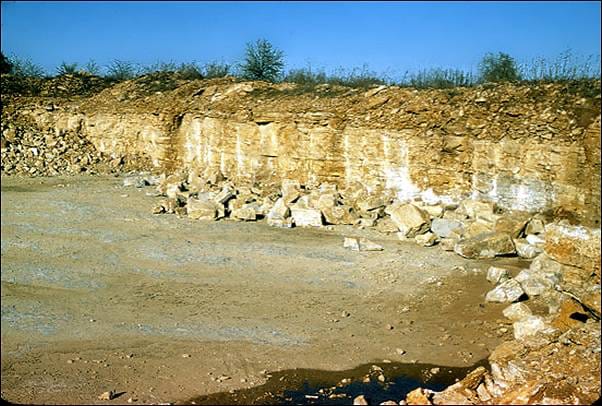
Limestone Quarry in Kansas
And that limestone is still all over Kansas today.
If you’ve ever driven through the Flint Hills, you’ve seen exposed limestone layers. If you’ve seen chalk cliffs in western Kansas, those are ancient seafloor deposits.

Does this look familiar?
Some Kansas limestone is literally made from the compressed remains of ancient sea life.
Kansas Fossils: Why the State Is Quietly Famous
Because Kansas was underwater for so long, it has world-class marine fossils.
Mosasaurs (40–50 ft marine reptiles)
Plesiosaurs
Sharks
Giant fish like Xiphactinus
Ammonites and shell fossils

Mosasaur
The Ice Age: Kansas on the Edge of the Glaciers

Fast forward tens of millions of years.
Now we’re in the Ice Age.
Kansas wasn’t buried under ice — but it sat just south of massive continental glaciers. That meant cooler temperatures, wetter conditions, and massive seasonal meltwater rivers.
Those meltwater systems helped carve modern river valleys and expose older rock layers including limestone and fossil beds.
The Arkansas River system and others were shaped in part by these processes.
Ice Age erosion helped reveal the geology that mining and construction still use today.
Peak “Wild Kansas”: Mammoths, Giant Bison, and Camels

Around 10,000–12,000 years ago, Kansas would have looked like prehistoric safari country.
Animals roaming Kansas included:
Columbian mammoths
Giant bison (larger than modern bison)
Ice Age horses
North American camels (yes — camels evolved here)

Giant Ground Sloth
Many of these animals are known from fossils found in Kansas river valleys and sediment deposits.
This is also when the first known humans were moving through Kansas, Paleoindian hunter-gatherers who followed migrating herds and camped near rivers.
Kansas wasn’t a permanent destination yet. It was a migration corridor.
The Great Warming: Kansas Starts Looking Familiar

After the Ice Age ended, the climate warmed quickly.

Megafauna = big animals
This triggered massive ecosystem shifts:
Modern bison populations emerged
Grasslands stabilized
Kansas slowly transitioned toward the prairie ecosystem we recognize today.
Plains Cultures and the Shaping of the Prairie
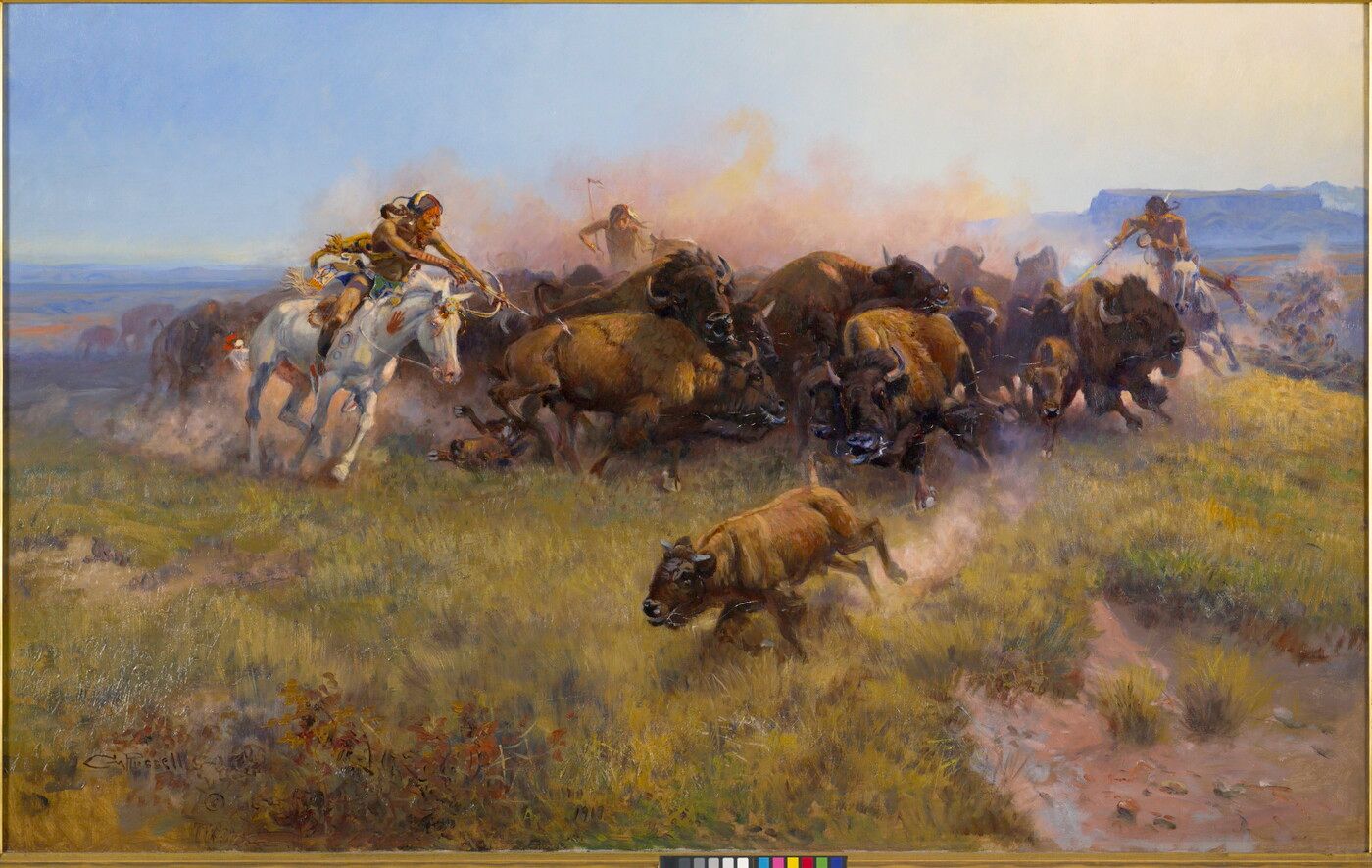
Around 1,000 years ago, we’re entering something closer to recognizable Kansas.
Used controlled burns to shape prairie ecosystems
Centered life around bison
Built large trade networks across the Plains
Many historians and ecologists believe humans played a major role in maintaining prairie ecosystems long before European settlement.
The Limestone Story (And Why It Still Matters)
Kansas limestone isn’t just geology trivia. It holds up huge parts of Kansas.
Limestone forms the base rock of huge parts of the state. It iInfluenced where towns developed and affects soil chemistry and agriculture. It even shows up in construction and roads.
The Flint Hills still exist largely because limestone and chert made the land hard to plow, preserving native prairie.
Bringing It Back to Wichita
If you stood in downtown Wichita and rewound time:
You would have once been underwater…
Then standing near glacial meltwater rivers...
Then watching mammoths cross grasslands...
Then watching early hunters follow bison…
Then watching Plains cultures shape the prairie.
Wichita isn’t just built on history. It’s built on layers of completely different worlds.
And somehow, all of them are still under our feet.
Did you learn something today? |
What do you want to see us go deep on in a future deep dive?

Together with Wichita Riverfest

We are running it back with our friends at Riverfest to show you why this is such a historic festival in Wichita.
This year the party takes place from May 29 through June 6, but you can sign up for many of the events today!
Wichita River Run (early registration ends February 28th)
Volunteer - sign up today! Riverfest thrives on volunteers
Much More

That's it for today!
If you enjoyed today, share this email with someone who loves history.
Thanks!
- Landon
